Gutter Cleaning
Remove leaves, needles and compacted debris from accessible gutter runs, then check the visible drainage path.
See gutter-cleaning detailsA visual, local-first guide to gutter cleaning, downspout clearing, guard maintenance, pricing factors and seasonal care across Knoxville and nearby communities.
Local phone-first information • Scope and availability confirmed directly.
Choose the service that matches the problem you are seeing. Each option is explained in a compact visual card so you can scan the scope before calling.
Remove leaves, needles and compacted debris from accessible gutter runs, then check the visible drainage path.
See gutter-cleaning detailsFocus on slow flow, blockage symptoms and the connected path from the gutter outlet to discharge.
See downspout detailsClear surface debris and check guard edges and entry points without treating guards as maintenance-free.
See guard detailsPlan recurring checks around tree cover, seasonal debris, storm exposure and the condition of the drainage system.
See maintenance detailsThese visual blocks turn common homeowner observations into useful service questions.
May indicate restricted flow, a downspout issue, slope, or another drainage condition.
A slow or backed-up discharge can point to a restriction somewhere between the gutter outlet and the lower section.
Heavy organic material can compact and reduce the open channel available for water.
Runoff crossing the gutter edge can leave visible patterns around fascia and siding.
A clean channel does not guarantee an open outlet, downspout or adequate downstream discharge.
Height and roof geometry change the practical cleaning method and the scope that should be discussed.
Each service gets its own destination when the intent is meaningfully different, while related drainage concepts stay connected.
Debris removal, channel inspection, drainage checks and cleanup.
ExploreBlockage symptoms, flow checks and lower discharge considerations.
ExploreSurface debris, guard edges, entry points and flow considerations.
ExploreSeasonal checks, recurring triggers and condition-based scheduling.
ExploreThe useful part is the sequence: inspect, remove, assess the connected drainage path, clean up and explain visible issues.
Look at gutter runs, corners, outlets, access and visible conditions.
Clear leaves, needles and compacted organic material from the agreed scope.
Assess downspouts and the water path where appropriate.
Clean the work area and communicate visible repair or follow-up needs.
There is no single honest price for every Knoxville property. The visual checklist below shows the variables a caller should mention.
Knoxville is not one roof environment. West, East, North and South Knoxville have different housing patterns, tree cover and access conditions. The local layer is used to make the service explanation more concrete—not to repeat the city name in every sentence.
Seasonal changes also matter. Leaf drop, storms and wet debris can change what a homeowner sees and when a gutter system starts behaving differently.
Explore West Knoxville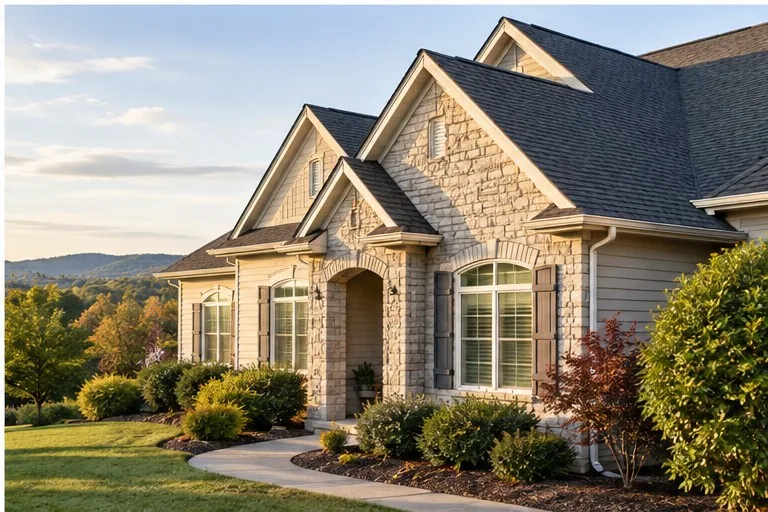
Open any topic below to get the details you need.
Each service has its own page when the search intent is meaningfully different; related concepts stay together when splitting them would create duplicate pages.
Debris removal, gutter-channel inspection, drainage checks and cleanup.
Blockage symptoms, cleaning process, water-flow checks and maintenance.
A gutter system is a simple water-management system: roof runoff enters the gutter, travels along the channel, then exits through an outlet and downspout. Cleaning is about keeping that path open and checking for visible problems that can interfere with drainage. A strong service visit should be clear about what is included, what is not included and what needs a separate repair.
For a Pay-Per-Call searcher, the most useful thing a page can do is reduce uncertainty. Homeowners want to know whether their problem sounds like debris buildup, a blocked downspout, a damaged gutter section or something larger. They also want to know what affects price and how quickly they can get someone to the property.
A complete cleaning discussion should cover the whole drainage path rather than stopping at the top of the gutter. That means looking at gutter runs, corners, outlets, downspout entry points, accessible lower discharge areas and visible conditions around the roof edge. Debris should be removed and the work area left in a reasonable condition.
For properties with guards, the work is different. A mesh or screen can still collect leaves, seed pods, pine needles and roof debris on top of the guard. A visit may therefore involve clearing the guard surface and checking whether water can enter the gutter below it.
The symptoms homeowners notice are often more useful than the keyword they typed. Water spilling over the front edge, a downspout that sounds full during rain, plants growing in the channel, sagging sections, stained siding or standing water near a discharge point each suggest a different inspection question. Cleaning may solve a blockage, but a broken hanger, separated seam or incorrectly directed outlet may require repair rather than more cleaning.
That distinction is part of trustworthy service information. A lead-gen site should never promise that cleaning fixes every gutter issue. The safer promise is clarity: identify the likely issue, explain what cleaning can address and tell the caller when a different trade or repair scope may be appropriate.
A practical workflow is inspect, remove debris, assess downspouts, verify flow where appropriate, clean up and communicate visible issues. The exact tools depend on the property, access, debris and gutter construction. The useful content is not a brand-name equipment list; it is an explanation of the sequence and what a homeowner should expect at each step.
For a two-story house or a roofline with difficult access, the method may differ from a single-story ranch. The site should explain that access and safety change the job rather than pretending every house is identical.
There is no single honest price that applies to every Knoxville property. Cost can change with total gutter length, number of stories, access, amount and type of debris, gutter guards, downspout blockage and whether a property needs additional attention. A useful estimate should reflect those variables instead of advertising a low number that only applies to a hypothetical house.
Our pricing guide breaks these variables down in plain language and gives the caller a better checklist for requesting a quote.
Frequency is property-specific. Tree cover, roof layout, nearby vegetation, debris volume and the performance of the downspouts all matter. Fall leaf drop is often an obvious trigger, but spring checks can also make sense after winter and early-season storms. A home surrounded by mature trees may behave very differently from a home with an open roofline and little overhang.
The goal is not to sell an arbitrary number of cleanings. It is to create a repeatable maintenance decision: inspect when buildup is likely, clean when debris restricts flow, and re-check after conditions change.
Knoxville-specific context is most useful when it explains the service. The city’s annual precipitation and seasonal changes mean roof runoff and leaf/debris timing are relevant maintenance considerations. The city also contains a wide range of neighborhoods and property settings, so “Knoxville” is not a single roof environment.
The local layer on this site therefore uses Knoxville, Knox County, neighborhood names and legitimate landmarks to establish where the service context applies, without stuffing place names into every sentence.
Our local coverage starts with Knoxville and nearby areas such as West Knoxville, East Knoxville, North Knoxville, South Knoxville, Bearden and Fountain City. Neighborhood-level pages are added only where the search intent and available local detail justify a separate page. A neighborhood name by itself does not create a unique search intent.
West Knoxville is the first dedicated hyperlocal page in the current architecture because the supplied SERP research showed a noticeably different result set for the West Knoxville query. Other areas can be evaluated the same way over time.
Gutter cleaning is connected to the rest of the roof drainage system. A blocked downspout can make a clean gutter appear ineffective. A dirty gutter guard can restrict water entry even when the channel below is relatively clear. A recurring maintenance plan can make sense for properties with heavy debris, but only when the visit frequency is based on actual conditions.
Use the service pages to learn what each component does, what symptoms point to it and which situations are better handled by inspection or repair.
Some homeowners simply do not have the time, access or interest to work around a roof edge. Others are dealing with a second story, heavy debris or a recurring downspout blockage. The decision is often less about whether a person could theoretically remove leaves and more about whether they want the whole drainage path checked and the cleanup handled at the same time.
Our information emphasizes safe, realistic expectations instead of dramatic ladder claims or exaggerated damage guarantees.
Knoxville sits in East Tennessee between the Cumberland Plateau and the foothills of the Great Smoky Mountains, with neighborhoods separated by the Tennessee River and a mix of older in-town housing and newer suburban development. The point of using local context here is practical: roof drainage, tree cover, access and seasonal debris are not identical from one property to another.
The National Weather Service’s Knoxville climate page gives 1991–2020 normals of about 51.93 inches of annual precipitation and notes an average of 68 days per year with minimum temperatures at or below 32°F. Rainfall totals do not tell you whether a particular house needs cleaning, but they help explain why an unobstructed roof-to-downspout drainage path matters locally. NOAA/NWS Knoxville climate data .
Local geography also matters. Visit Knoxville identifies communities such as West Knoxville, East Knoxville, Fountain City, Bearden, Sequoyah Hills, Rocky Hill, Cedar Bluff, West Hills and South Knoxville. A neighborhood list should be used as a service-area framework, not as a reason to publish dozens of near-duplicate pages. Visit Knoxville neighborhood guide .
A gutter should be thought of as one part of a connected water path. The roof sheds rain, the gutter collects it, the outlet moves it into the downspout and the discharge point sends it away from the structure. Debris at any of these points can change the behavior of the system.
A channel can look mostly clear from the ground while a corner, outlet or downspout remains restricted. Conversely, a small amount of visible debris may not matter if the flow path remains open. Cleaning decisions should therefore be based on condition and symptoms rather than appearance alone.
The question set gathered for this project repeatedly centers on price, frequency, timing, recommendations, process and whether professional cleaning is worth paying for. Those are decision questions, so this site answers them directly and keeps deeper explanations on dedicated pages.
If you see heavy debris, inspect the gutter channel.
If water overflows, consider the gutter, outlet and downspout together.
If guards are installed, inspect the guard surface and edges.
Knoxville is not one uniform residential landscape. Visit Knoxville describes South Knoxville across the Tennessee River, Fountain City in north Knoxville, East Knoxville east of downtown and Bearden west of downtown, with West Hills, Cedar Bluff and Rocky Hill among other western communities. These distinctions are useful for service-area navigation.
The National Weather Service reports 51.93 inches of average annual precipitation in its 1991–2020 Knoxville climate normals. That figure does not tell a homeowner exactly how often to clean a gutter, but it provides legitimate context for why runoff management matters. The property’s vegetation and drainage conditions still determine the maintenance decision.
These are the practical details we use to make a Knoxville quote more specific without pretending every house has the same drainage setup.
One-story and two-story homes can have different access, roof-edge length and cleaning scope. Tell us the number of levels and which side of the home is easiest to reach.
Leaves, pine needles, seed pods and wet compacted material do not behave the same way. Heavy organic buildup can reduce the open channel and hide the outlet.
A gutter can look clean while the connected outlet or downspout is restricted. The useful question is not only “is the gutter empty?” but “where is the water supposed to go?”
After a heavy rain, overflow, splash, slow discharge or pooling can reveal a drainage issue that was not obvious during dry weather. Recent weather is useful quote context.
Driveways, gates, landscaping, slopes and roof geometry can change the practical access plan. Mention anything that limits where equipment can be placed.
Guard style, hangers, seams, end caps and visible sagging can change what should be inspected. Cleaning and repair are kept as separate decisions.
Neighborhood or ZIP is useful because Knoxville-area properties span downtown, river corridors, established neighborhoods and fast-growing suburban edges.
“Overflowing at the front,” “downspout slow,” “plants growing,” or “water pooling below the outlet” is more useful than trying to diagnose the system yourself.
Knoxville's 1991–2020 climate normals show about 51.93 inches of annual precipitation. The point is not to sell on a weather statistic; it is to explain why runoff, debris and timing matter locally.
Check for winter debris, slow outlets and overflow before repeated spring rain exposes weak drainage points.
After a strong rain, look for splash, overflow, saturated areas near discharge points and water that backs up at the downspout.
Tree cover can change the debris load quickly. Packed leaves and wet material deserve more attention than a quick visual glance.
Cold periods can expose existing drainage weaknesses. Keep outlets clear so normal rain and meltwater have a defined path.
Local entities are used as geographic reference points—not as keyword stuffing or claims that a specific school, hospital or venue is a service customer.
Events are included only where they add real Knoxville context. Dates change, so verify the official organizer calendar before relying on them.
Neyland Stadium has Knoxville home games through November 2026, including Texas, Auburn, Alabama, Kentucky and LSU.
Dogwood Arts lists fall gallery and First Friday programming, followed by its 2027 House & Garden Show.
Downtown Knoxville's multi-venue music and arts festival returns in spring 2027.
The 2027 race weekend includes events around World’s Fair Park and downtown Knoxville.
The spring festival returns to World’s Fair Park, making it a useful marker for Knoxville's spring calendar.
We keep the service-area navigation focused on locations represented by actual pages, while nearby communities remain part of the broader Knoxville local context.
The useful question is not only whether leaves are present. It is whether the roof runoff can move from the roof edge into the gutter, through the outlet and downspout, and out at the intended discharge point without a restriction.
Leaves, pine needles, twigs, seed pods, roof sediment and wet or compacted buildup can reduce usable space inside a gutter. Cleaning restores the channel so incoming runoff has room to travel.
Corners, outlet openings, elbows and end caps are small components with a big effect on flow. A clean-looking channel can still overflow when the outlet area is restricted.
Hangers support the gutter, seams connect sections, and fascia sits behind the roof edge. Visible sagging, separation or leaking can indicate a condition that cleaning alone will not correct.
The downspout carries water away from the gutter. Slow drainage, standing water or repeated overflow can point to a blocked downspout or poor discharge path.
Gutter guards change what reaches the channel but do not make the system maintenance-free. Surface debris, guard edges and entry points can still restrict water.
The roof edge, fascia and soffit form the immediate context around the gutter. Cleaning should stay focused on the drainage path while obvious adjacent issues are noted rather than ignored.

A gutter can overflow because material is blocking the channel, an outlet is restricted, a downspout is slow, the gutter slope is wrong, a hanger has failed, a section has pulled away, or the discharge route is not moving water where it should.
That is why useful gutter-cleaning guidance separates visible symptoms from likely causes. Cleaning addresses accumulated material; repair questions belong to the component or drainage condition that remains after the debris issue is understood.
Water crosses the front edge or pools where it should not.
A section stays full after rain instead of draining normally.
Visible movement or leakage can indicate a hardware or seam issue.
A clean channel can still underperform when the connected path is restricted.
Open any topic below to get the details you need.
Think of the system as a chain: roof runoff reaches the roof edge, enters the gutter, passes through the outlet, travels through the downspout and exits at the discharge point. Hangers support the gutter, seams join sections, end caps close the runs, and elbows redirect the downspout. Fascia and soffit sit next to the drainage components and may show secondary issues when a gutter has detached or leaked.
Leaves and pine needles are common in tree-lined Knoxville neighborhoods. Twigs, seed pods, roof sediment and wet buildup become more difficult to move when they compact. Debris volume is influenced by tree cover, roof layout, weather and how much roof area feeds each run.
Overflow, standing water, slow drainage, recurring wet spots, visible plants or moss-like growth, sagging gutters, leaking seams and detached sections are useful clues. A symptom is evidence to investigate, not automatic proof of one specific cause.
A gutter can be clean and still drain poorly when its slope does not guide water toward the outlet. Hangers or fasteners that loosen can change the gutter line. Damaged hardware, separated sections and fascia conditions may require repair-oriented attention rather than another cleaning visit.
Guards reduce debris entry, but leaves can sit on top, fine material can collect around openings, and guard edges can become dirty. Guard type, roof pitch and tree cover influence how the system behaves. Cleaning and replacement are different decisions.
Frequency depends on the property. Mature trees, heavy debris, roof configuration and storm exposure can shorten the interval, while lower-debris properties may need less frequent attention. Spring and fall are common planning windows, but actual accumulation and symptoms are better signals than a fixed month.
DIY is more straightforward when a gutter is low, accessible and lightly soiled. The decision changes with second-story access, awkward roof geometry, heavy debris, downspout restrictions or a desire to have the connected drainage path assessed at the same time.
Knoxville, Knox County and neighborhoods such as West Knoxville, Bearden, Fountain City, East Knoxville and South Knoxville are useful when they explain local housing, tree cover, terrain or service navigation. The name should add meaning instead of being repeated without a reason.
Useful local reference points can include Downtown Knoxville, the Sunsphere and World’s Fair Park, the University of Tennessee area, and Knoxville Urban Wilderness when they help explain the setting around a property. Seasonal context also includes summer storms as well as spring leaf growth, fall leaf drop and winter weather; these are context cues, not fixed service schedules.
9003 Grayland Dr, Knoxville, TN 37923
Recent Google reviews for Knoxville Gutter Solutions LLC.
Four concrete service facts are easier to scan than a long sales paragraph.
Knoxville-centered coverage with a stated service radius for properties that fall within the working area.
More than 12 years of stated gutter-service experience, giving homeowners a clear experience signal.
Tennessee contractor licensing is stated as part of the service information and can be verified before work.
Free estimates are available for residential clients, with the job scope clarified before work begins.
If you are comparing quotes, compare the service scope—not just the headline price.
Our strongest fit is for homeowners who want a cleaning-first local service with the scope clearly defined before work starts.
| What matters | Knoxville Gutter Solutions | Other local / marketplace options |
|---|---|---|
| Gutter cleaning as the main service | ✓ Cleaning-first scope | Varies by provider |
| Downspout cleaning / drainage focus | ✓ Included service path | Varies by provider |
| Gutter guard cleaning | ✓ Dedicated service path | Varies; some are product-focused |
| Knoxville-centered coverage | ✓ Knoxville + surrounding service area | Varies by service area |
| 50-mile stated service radius | ✓ Clearly stated | Varies |
| Licensed Tennessee contractor | ✓ Clearly stated | Verify with each provider |
| Free estimates | ✓ Clearly stated | Common, but verify scope |
| 12+ years experience | ✓ Clearly stated | Varies |
| Quote factors explained visually | ✓ Length, stories, access, debris, guards & downspouts | Often requires asking for details |
You can see the main factors that can change the job before asking for a quote.
Cleaning, downspouts, guards and maintenance are organized as connected service paths.
Knoxville-centered coverage, stated radius, licensing and experience are easy to check.
Short paths to the next useful page.
Direct answers to the questions homeowners commonly have about cost, timing, scope, drainage and access.
Pricing depends on gutter length, stories, access, debris, guards and downspouts. Use the property details to request a current quote.
Many properties benefit from timing around seasonal debris, especially before or after heavy autumn leaf drop, with local weather and tree cover considered.
Yes. Guards reduce debris entry but do not make a roof drainage system maintenance-free.
Overflow near the gutter, slow drainage and water that does not leave the system normally can point to a blockage.
It can be a practical choice when access is difficult, time is limited or you want the downspout and drainage path checked at the same time.
A useful quote should state the property scope, including gutter length, stories, access, debris, guards and downspouts. Any repair work should be identified separately.
Not necessarily. Clarify whether the scope covers the gutter channel only, the visible gutter face, fascia or other exterior surfaces.
Ask whether removed debris and the immediate work area are included in the quoted scope. This makes two otherwise similar quotes easier to compare.
Compare the scope, not just the headline price: access, gutter length, debris, guards, downspouts, cleanup and separate repair work can change the actual job.
Tell us what you are seeing—overflow, debris, a slow downspout, gutter guards or another drainage concern—and call for current availability.